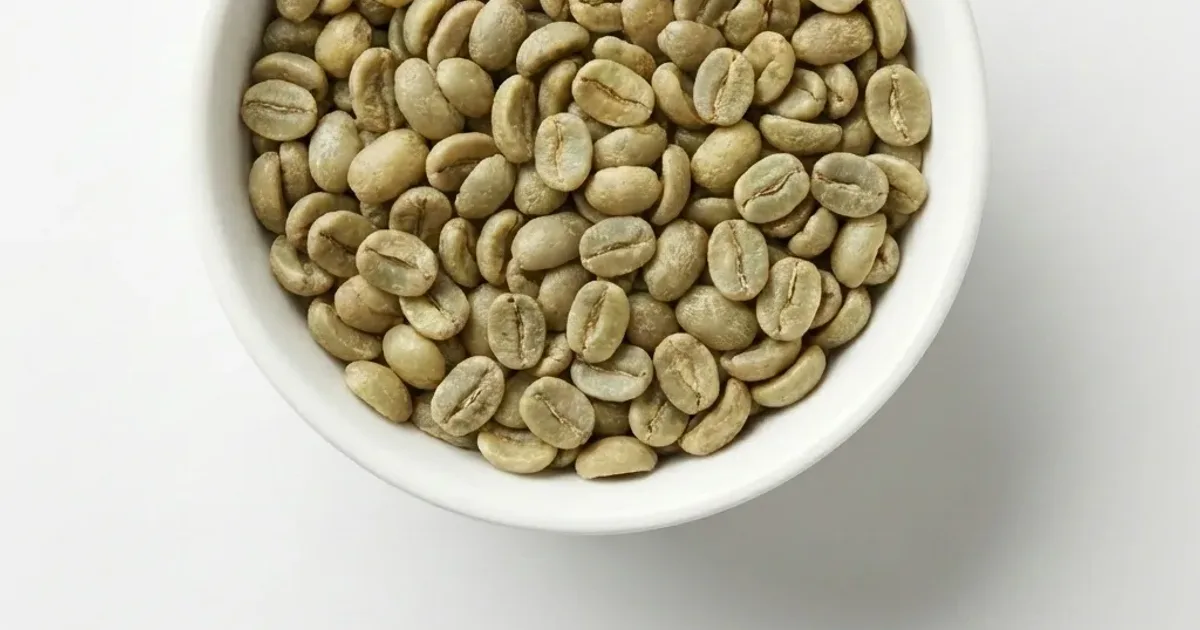
Processing is the single biggest lever on green coffee flavour after origin. Here is the practical difference for a roaster.
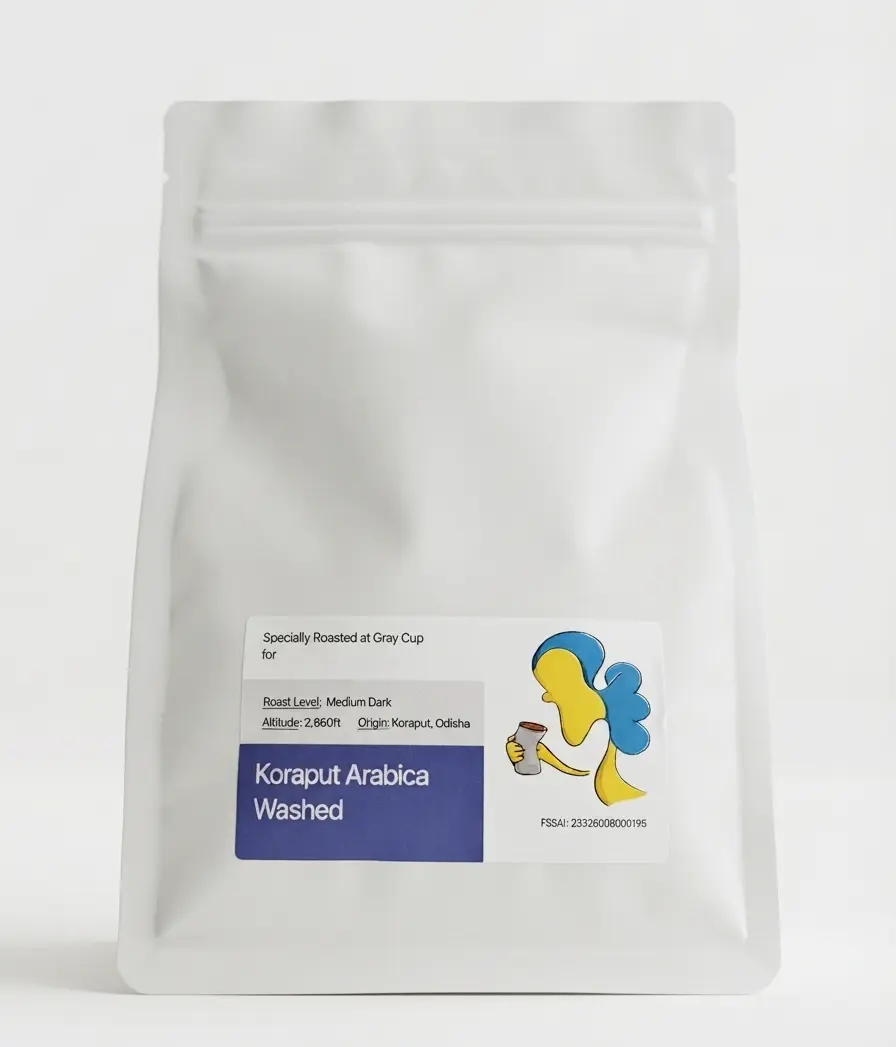
Freshly roasted by Gray Cup, our roasting partner, ships across India.
Washed
The cherry is pulped, the remaining mucilage is removed by fermentation and washing, and the parchment bean is dried. Nothing fruity is left touching the bean.
- Cup: clean, transparent, higher perceived acidity, origin character front and centre.
- Consistency: high, fewer surprises bag to bag.
- Roasting: predictable; even moisture, even colour development.
- Best for: single-origin filter, pour-over, lighter roasts, anywhere you want clarity.
Natural
The whole cherry is dried intact for weeks; the bean ferments slowly inside the fruit before hulling.
- Cup: heavy body, dark fruit, wine/berry, chocolate, lower acidity, sometimes boozy.
- Consistency: lower, drying is harder to control, more cup variation and occasional ferment defects.
- Roasting: trickier; uneven density and sugar content, easy to scorch, needs a gentler, longer development.
- Best for: espresso blends, milk drinks, darker profiles, adding body to a blend.
Honey (in between)
Pulped but dried with some mucilage on, sweeter and rounder than washed, cleaner and more consistent than natural.
Koraput: try both
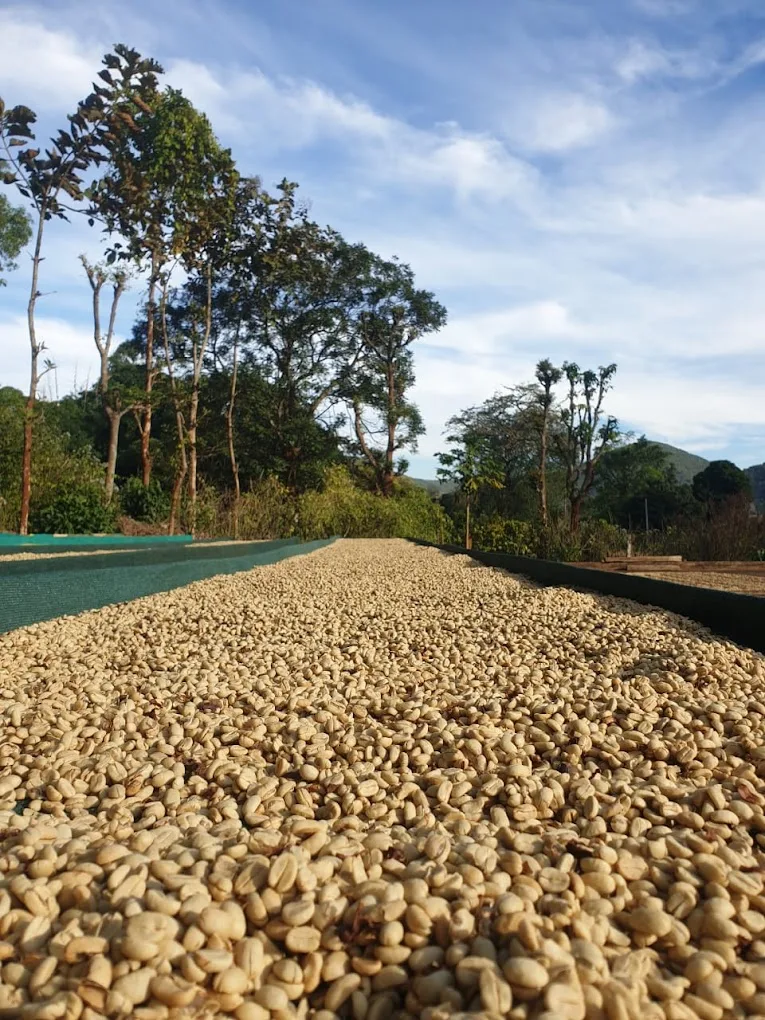
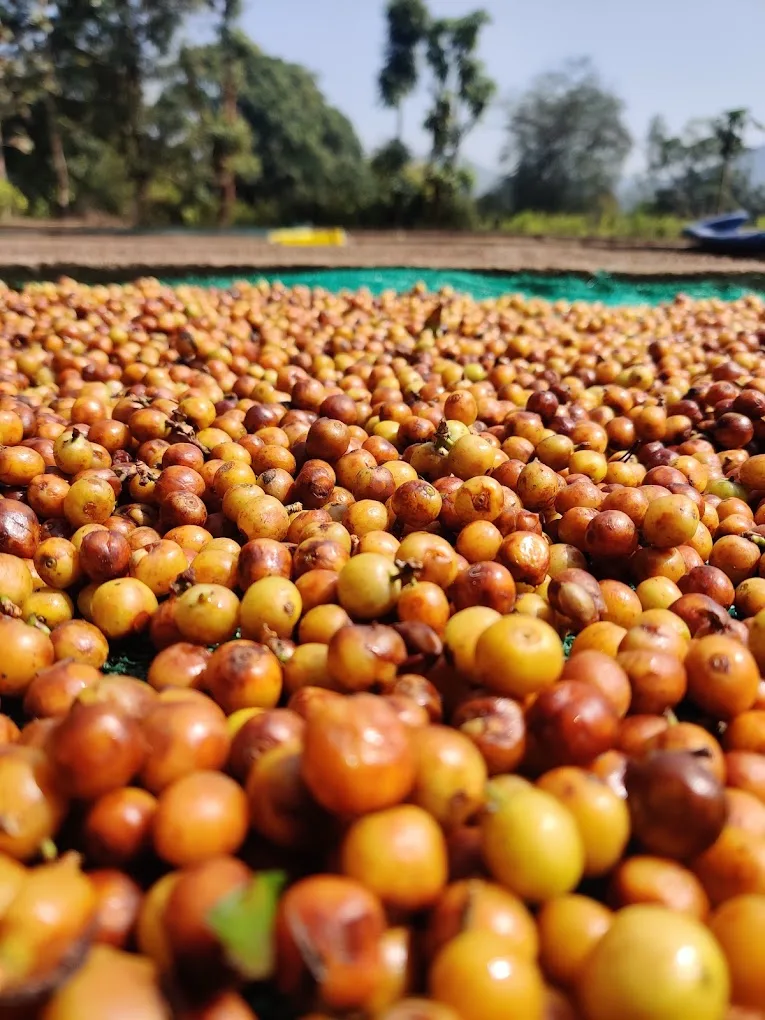
The roaster's answer
Buy washed if you sell single-origin filter and want repeatability. Buy natural for body and fruit in espresso blends, and price in more QC time. Most roasters carry both. Honey is the low-risk way to add sweetness.
Roasted, not green
Odisha Coffee also sells washed and natural Koraput lots already roasted on the roasted coffee page, and Gray Cup will roast a chosen green lot to profile.