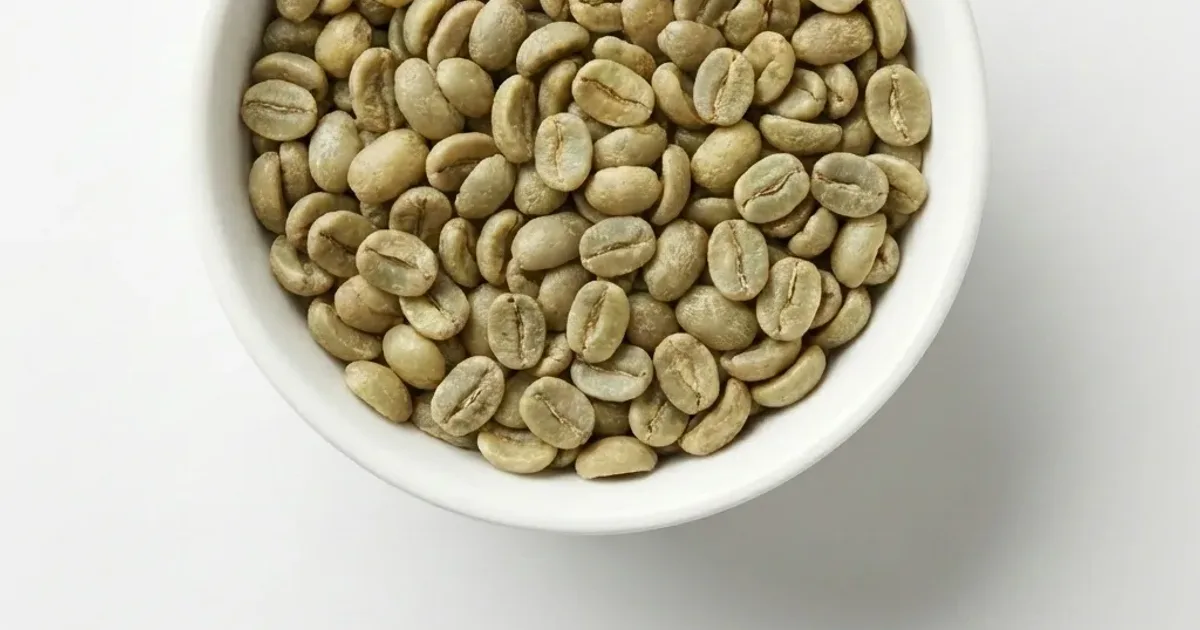
Green coffee is the raw, unroasted seed of the coffee cherry, dried to a stable moisture level and sorted for size and defects. It is what roasters buy. This guide covers how to read an Indian green coffee lot before you commit.
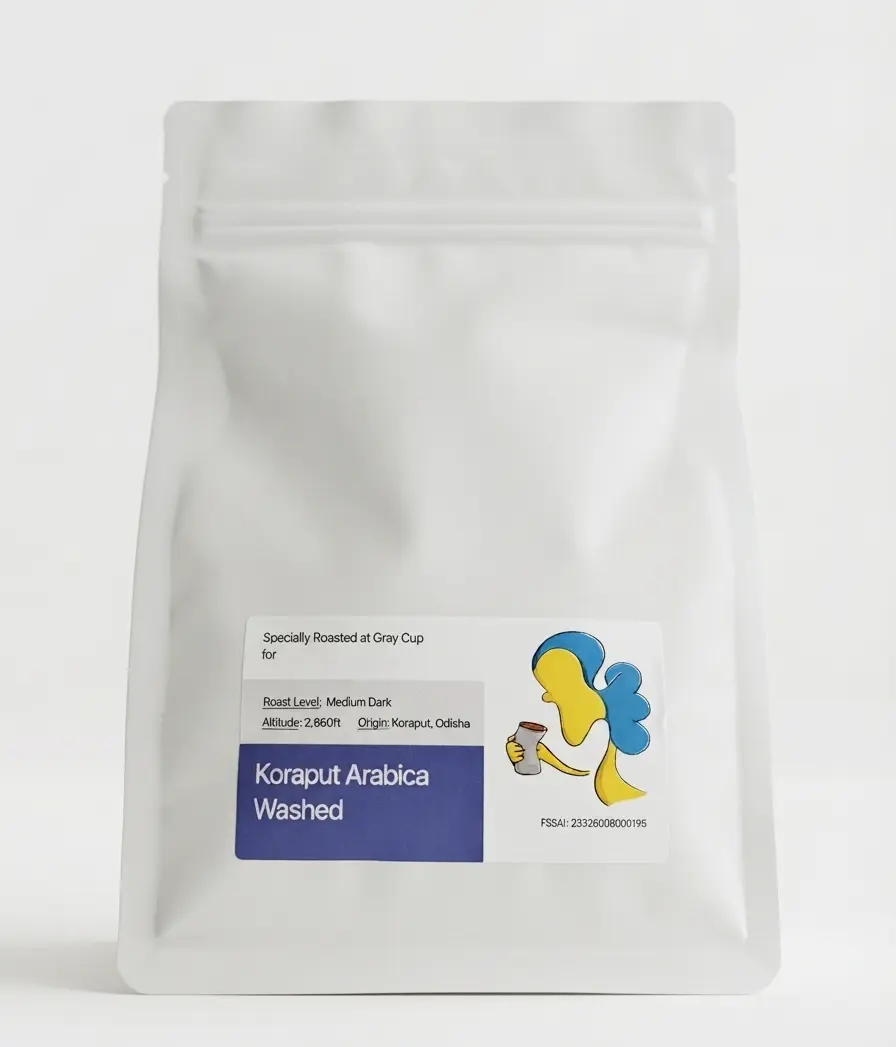
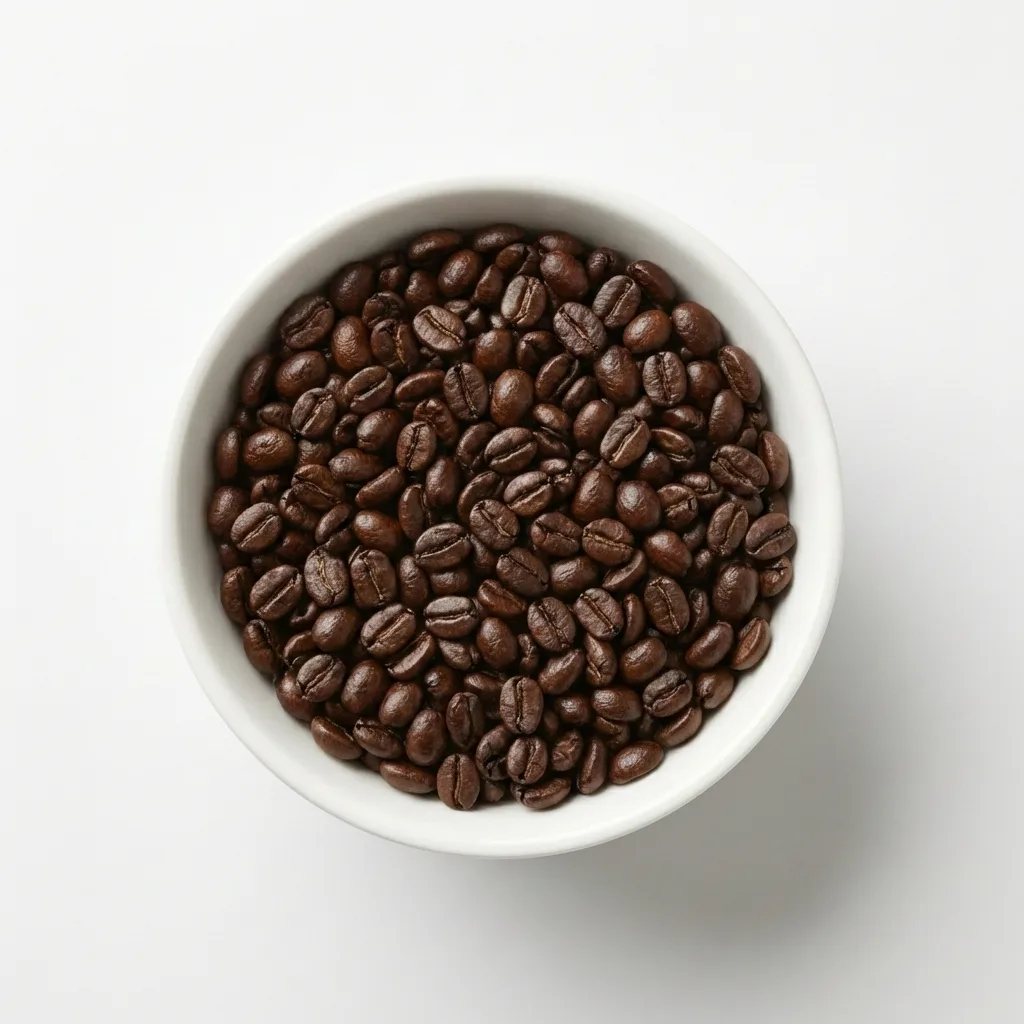
Freshly roasted by Gray Cup, our roasting partner, ships across India.
What you're evaluating
Grade: In India, washed Arabica is graded (best to commodity) roughly Plantation AAA / AA / A / PB (peaberry) / B / BBB, based mostly on screen size and defect count. Grade is a sorting spec, not a taste score (a well-farmed A can out-cup a lazy AAA) but higher grades give bigger, more uniform beans that roast more evenly.
Screen size: Bean size in 1/64 inch. Screen 17+ is large and uniform; screen 14–15 roasts faster and less evenly. Uniformity matters more than raw size.
Moisture: Should sit at 10–12%. Below 9% the beans are brittle and bake; above 12.5% they mould and lose sweetness in storage.
Processing: Washed (clean, transparent), natural (fruit-forward, heavier), honey (sweet middle), anaerobic (funky, limited). This drives cup character more than grade.
Density & crop year: Denser (higher-grown) beans take more heat. Current-crop beans roast predictably; past-crop beans go flat and papery.
Koraput, Odisha green lots
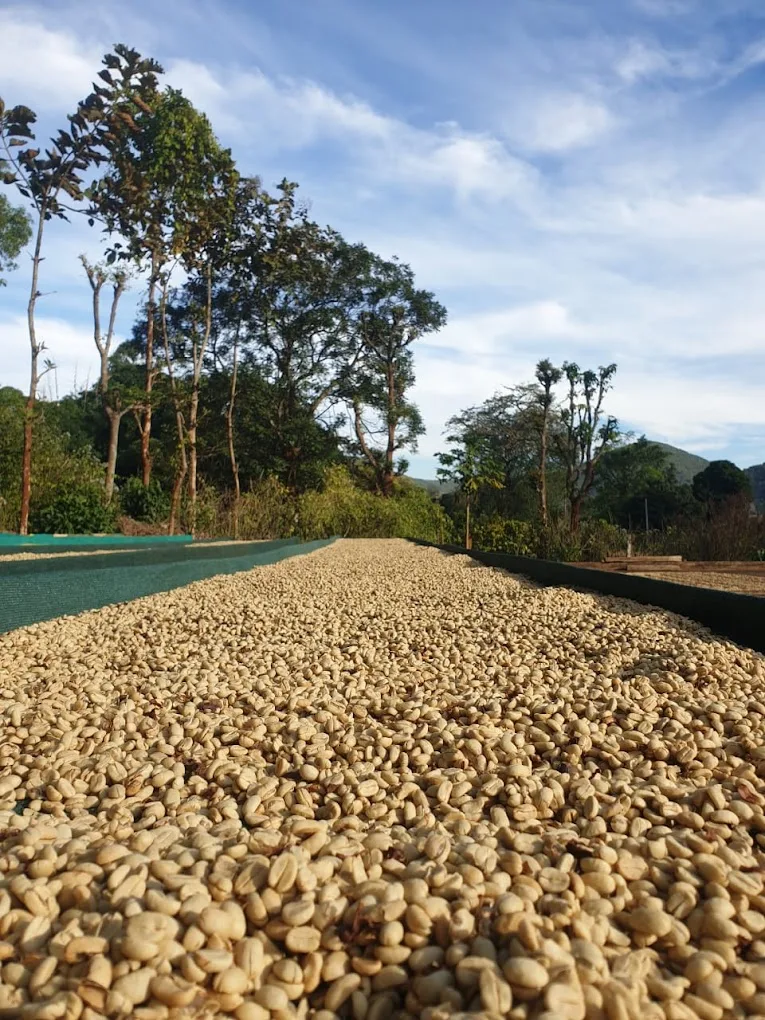
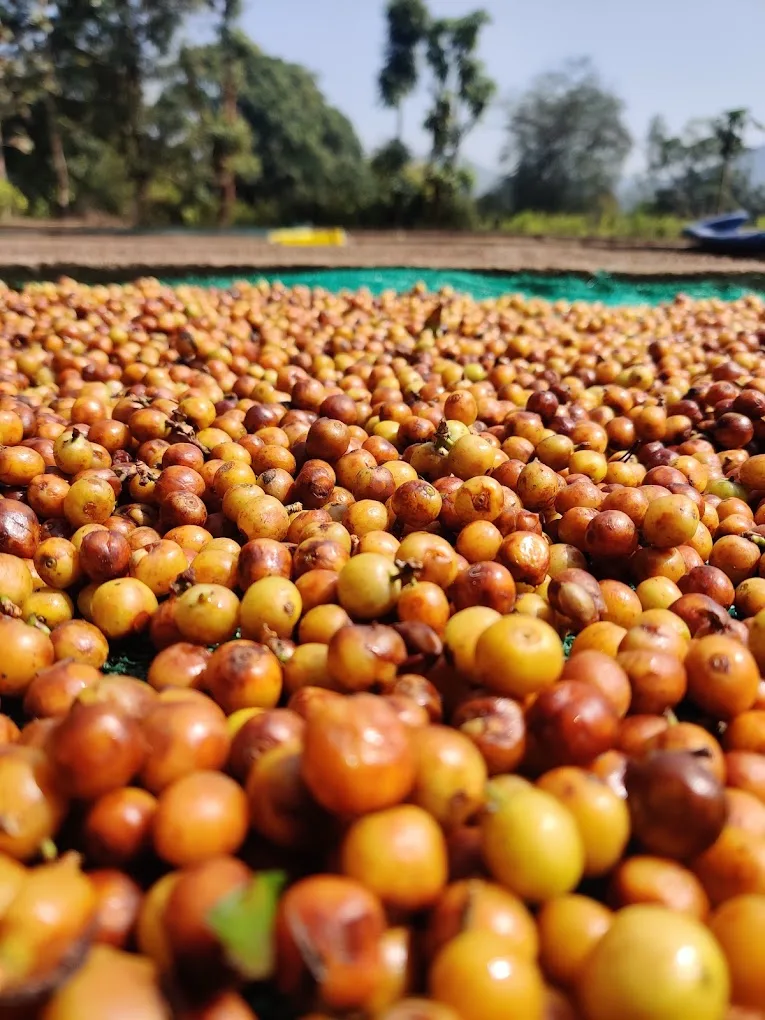
Export-grade lots ship from named partner farms with FSSAI and phytosanitary documentation; minimum order quantities depend on the lot.
How to actually buy
- Get a sample. Roast 100–250 g, cup it, and check it roasts evenly before ordering volume.
- Confirm moisture and crop year in writing.
- Start with one washed and one natural to learn the origin.
- Buy what you'll use in ~6 months, green coffee stales too.
Roasted-coffee route
If you want Koraput coffee roasted rather than green (for a café menu, private label, or just to drink) Gray Cup roasts these same lots to profile. And Odisha Coffee's own roasted range sells the washed and natural Koraput lots ready to brew.