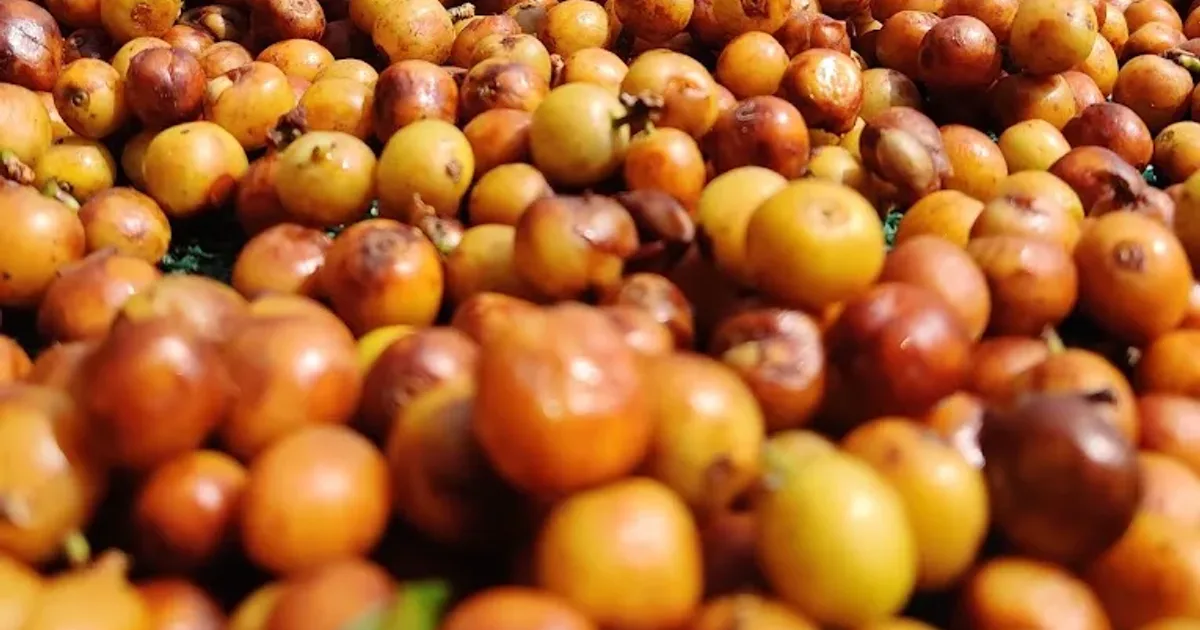
Every bag of Koraput coffee starts as a fruit on a hillside and ends as a brewed cup. Here is what happens in between.
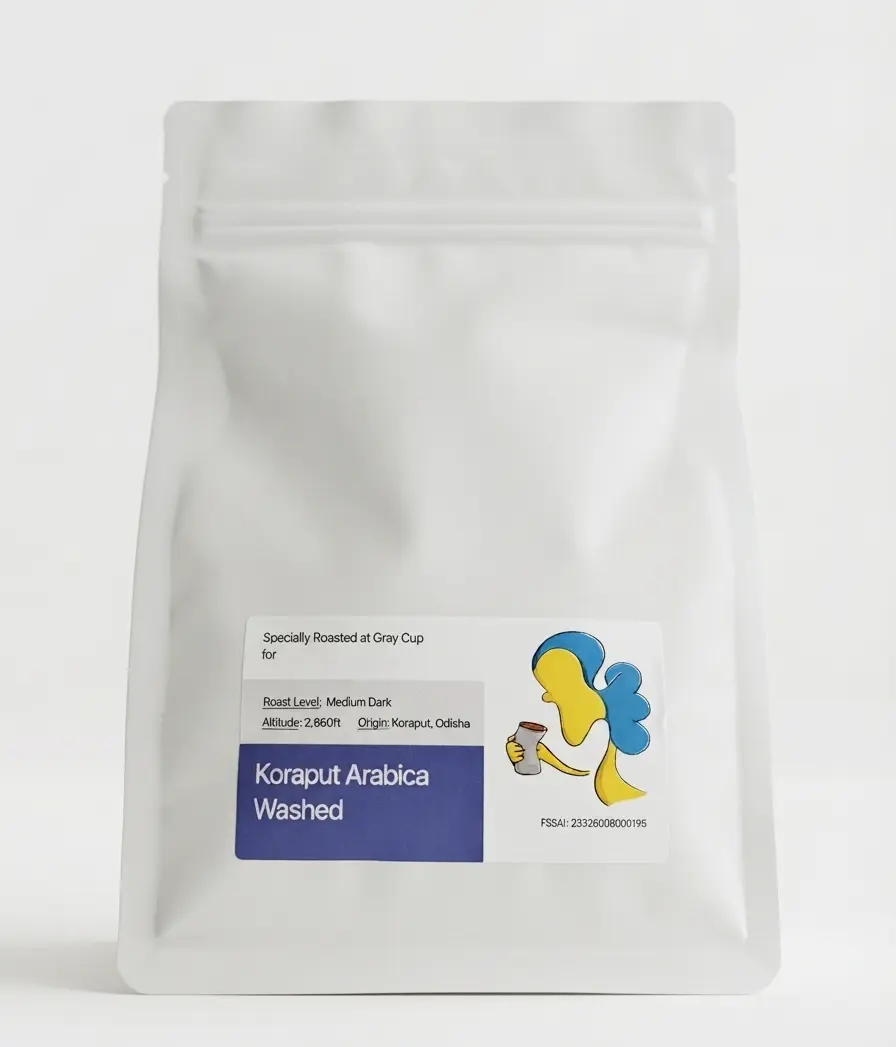
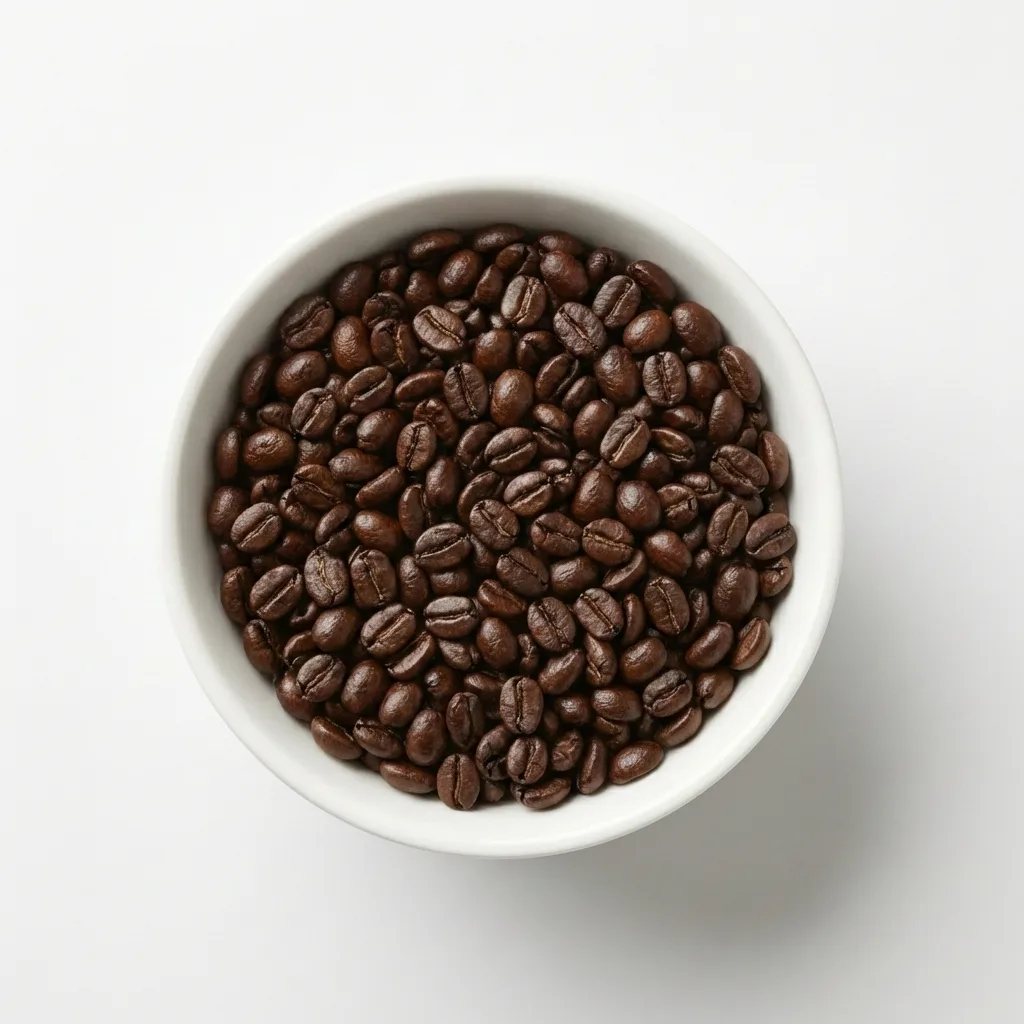
Freshly roasted by Gray Cup, our roasting partner, ships across India.
1. Farm and harvest
Smallholders in Koraput pick ripe red cherries by hand, usually November to February. Ripeness at picking sets the ceiling on cup quality, under-ripe cherries taste green and astringent no matter what happens next.
2. Processing
At the mill the cherries are sorted and processed:
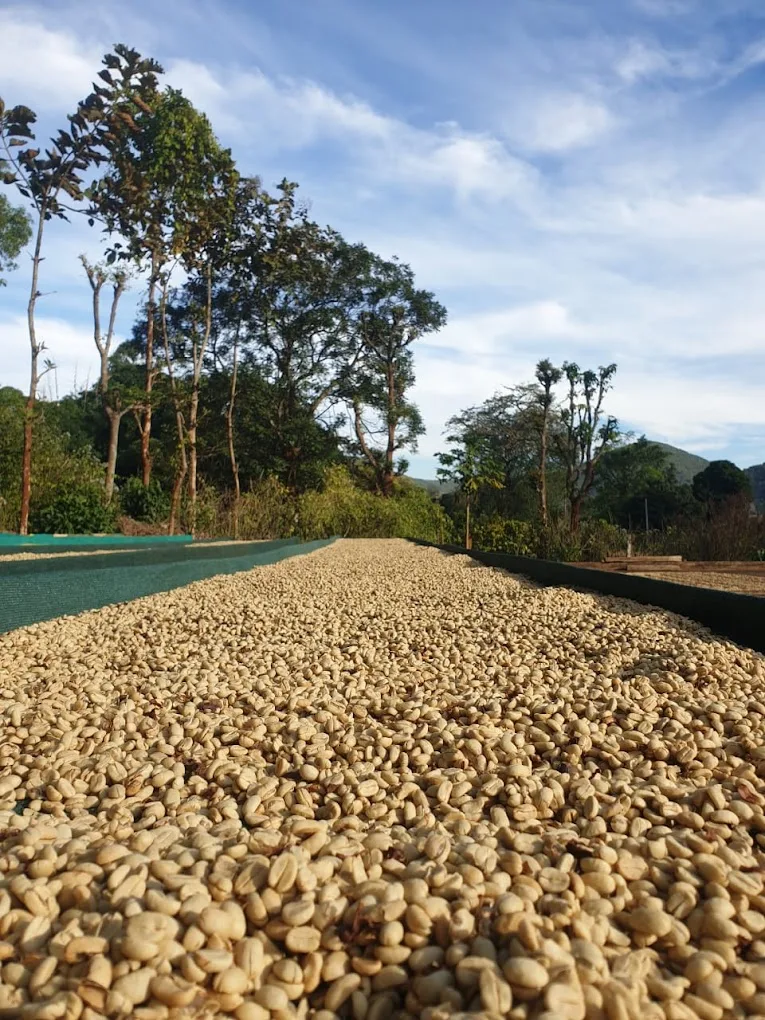
- Washed: pulped, fermented, washed, dried on parchment.
- Natural: dried whole on raised beds for 25–30 days.
- Honey: pulped, dried with mucilage still on.
3. Drying and resting
Beans dry to 10–12% moisture, then rest in parchment for weeks to stabilise. Hulling removes the parchment layer to reveal the green bean.
4. Grading and green sale
Green beans are sorted by screen size and defects (AAA, AA, A, PB…) and sold to roasters:
5. Roasting
The roaster applies heat over 8–14 minutes. Sugars caramelise, acids break down, moisture drops, the bean expands and cracks (first crack ~196°C, second crack ~224°C). Where the roaster stops (light, medium, dark) decides acidity vs body vs bitterness.
6. Cooling, resting, packing
Roasted coffee is crash-cooled, rested 24–72 hours to degas CO₂, then packed in valve bags with a roast date.
7. Brew
Ground fresh, brewed as filter, pour-over, French press or espresso.
Buying at each stage
- Green beans to roast yourself: the Koraput green catalogue.
- Roasted and ready to brew: Odisha Coffee's roasted range.
- A green lot roasted to your profile: Gray Cup, which works with the same farms.
