Where and how high
Koraput coffee grows on the plateaus and hill slopes of the southern Eastern Ghats, mostly between 900 and 1,200 m. Lower than the Western Ghats estates, with thinner soils and a shorter monsoon.
Climate
A single south-west monsoon (June–September), a cooler dry winter, and pre-monsoon "blossom showers" in March–April that trigger flowering. Irrigation is limited, so timely rain matters.
Shade and intercropping
Coffee is grown under a canopy of silver oak and native forest trees, often intercropped with black pepper, banana, and turmeric, which spreads the smallholder's income and risk across crops.
Varieties
Mostly Arabica, S795, Chandragiri, HSD, some Cauvery and small SLN 9 plots. Robusta is minor here compared to South India.
The season
- Mar–Apr: flowering after blossom showers.
- Jun–Oct: cherry development through the monsoon.
- Nov–Feb: ripening and hand-harvest of red cherries.
Processing and drying
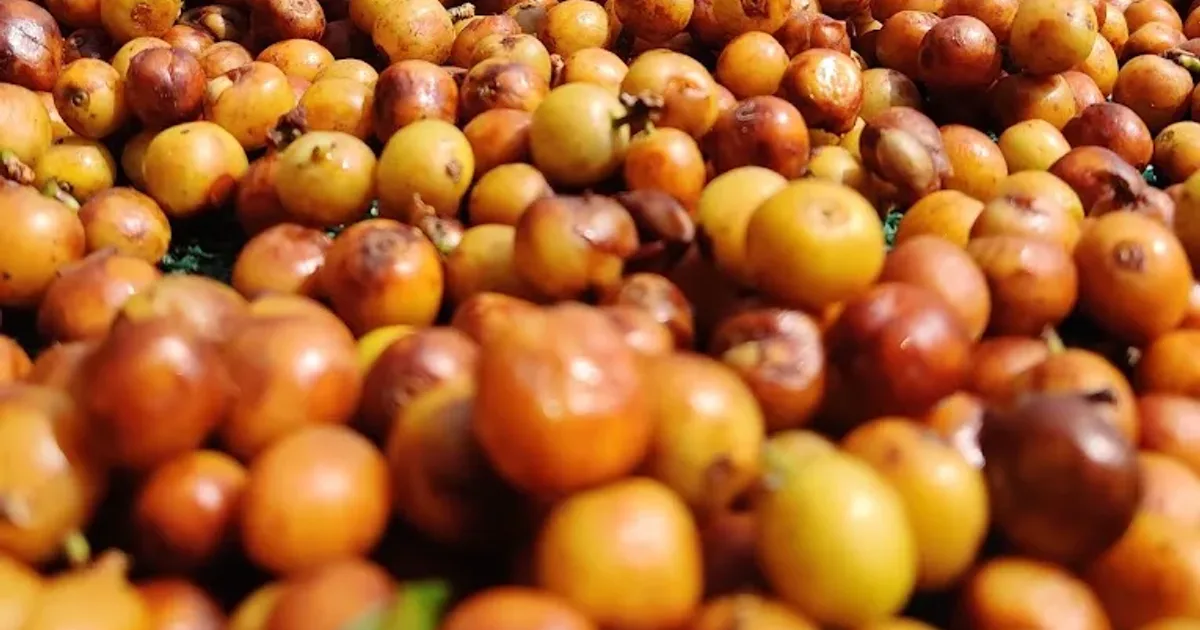
Cherries go to village or estate wet mills for washed, natural or honey processing, then dry on raised beds to 10–12% moisture over 2–5 weeks before resting and hulling.
Who farms it
Overwhelmingly tribal smallholders, often on plots under two acres, organised through farmer foundations and development agencies that built much of the recent milling infrastructure.
Gray Cup roasts coffee from these farms, and OdishaCoffee.com supplies the same lots as green beans and roasted coffee.
Explore Koraput's partner farms and green coffee from Odisha.